



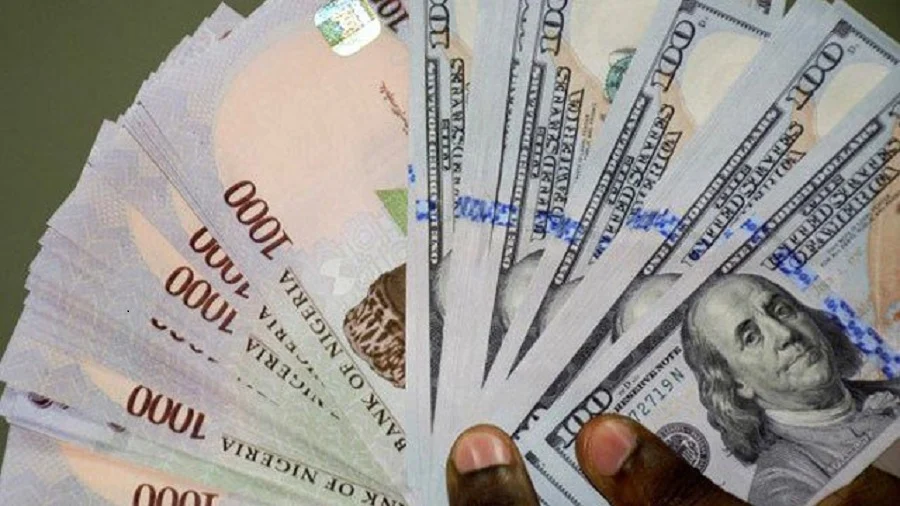
The naira strengthened on the first trading day of the New Year, rising to N1,430.84/$ in the official window, according to Central Bank of Nigeria data.
Over the last week, the naira has stayed around the N1,440/$ level at the official window, with relative stability backed by increased FX supply and CBN interventions, as well as Nigeria’s external reserves acting as an extra cushion. The naira gained N12.53 per dollar this week (up 86 basis points from the previous week). It moved between N1,427.00 and N1,445.68 per dollar, rising in three of the four trading sessions.
Meanwhile, experts have remarked that the exchange rate has remained relatively constant, in contrast to the previous year’s dramatic volatility. Meristem Securities noticed that while the average exchange rate in 2025 (N1,519.63/$) was somewhat lower than N1,486.03/$ in 2024, volatility fell dramatically to 0.53 percent from 4.58 percent, reflecting increased FX liquidity and stronger external buffers.
On the official Nigerian Foreign Exchange Market, the naira last fell below N1,430/$ on October 31, 2025, trading at N1,421.73/$. The stability achieved was largely due to CBN-led changes, including as the implementation of the Electronic Foreign Exchange Matching System in December 2024 and the FX Code, which increased market transparency and pricing efficiency while helping to reduce speculative activity.
Nigeria’s external reserves also increased considerably in 2025, rising 10.60 percent year to date to $45.21 billion from $40.9 billion at the end of 2024. While reserve building was hampered by foreign debt servicing and CBN FX market interventions in the first half of the year, it rebounded in the second half thanks to better FX inflows from increased trade receipts, robust capital importation, and proceeds from Eurobond issuances.
Meristem analysts predicted that the naira will trade between N1,350.00/$ and N1,528.57/$ in the coming year, noting, “The official exchange rate is expected to remain broadly stable in 2026, supported by sustained foreign inflows and a resilient external reserve position.”
The Federal Government’s planned foreign currency issuances, as indicated in the MTEF, are also expected to improve external reserves. Although oil receipts may continue to be low, inflows from gas and non-oil exports should boost reserve levels by 2026. Furthermore, strong FPI inflows, bolstered by rising investor confidence and capital flight caused by a projected dovish posture in major countries, should help to sustain FX liquidity.
